Dellanor Script: A Luxury Typeface for Wedding Invitations and Branding
There’s a moment in every design project when you realize the typeface you’ve chosen isn’t just filling space—it’s telling a story. For projects that demand romance, sophistication, and a touch of handcrafted luxury, that story often begins with a script font. Dellanor Script is one such typeface, designed with flowing, ornate strokes that feel both personal and polished. It’s the kind of font that doesn’t just sit on a page; it dances, whispers, and makes a statement all at once. Whether you’re a designer crafting a client’s wedding suite, a small business owner building a luxe brand identity, or a content creator looking for that perfect editorial accent, understanding how to use a font like this effectively can transform your work from simply nice to genuinely memorable.
The Visual Personality: More Than Just Curls and Swashes
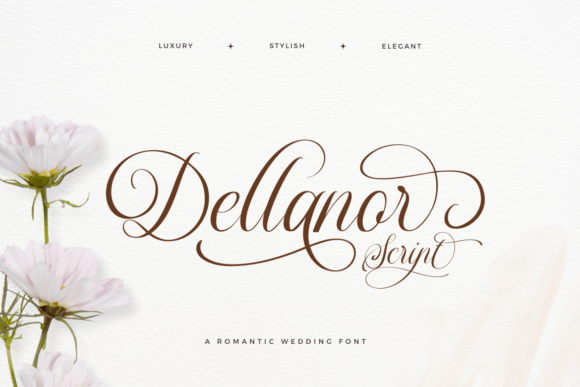
At its heart, Dellanor Script is a romantic display font. Its visual appeal lies in its balanced contrast—thick and thin strokes that mimic the pressure of a traditional calligrapher’s pen, combined with elegant, flowing connections between letters. This isn’t a stiff, formal script; it has a sense of movement and grace that feels organic. The ornate details, like delicate swashes and alternate letterforms, are its superpower. Many premium script fonts include these stylistic alternates, allowing you to customize the look of specific letters. This means you can adjust the tail of a lowercase ‘g’ or the flourish on a capital ‘M’ to perfectly suit your layout, avoiding repetitive, robotic-looking text and achieving a truly bespoke feel.
This level of customization is what separates a good design asset from a great one. It allows you to tailor the typography to the exact mood of your project. For a whimsical, garden-party wedding invitation, you might choose more exaggerated, flowing swashes. For a sophisticated brand logo, you could opt for cleaner, more restrained alternates to ensure legibility at smaller sizes. The font’s personality is versatile within its core style, making it a valuable tool for a range of creative applications beyond the obvious.
Practical Applications for the Modern Creative
While its first calling is undoubtedly wedding invitation design, Dellanor Script’s utility extends far into the worlds of branding, marketing, and editorial design. Its luxury feel makes it a natural fit for businesses that want to convey elegance, craftsmanship, and attention to detail.
- Branding & Logo Design: For boutique hotels, high-end florists, artisanal bakeries, or jewelry designers, this script can form the core of a memorable logo. Paired with a clean, geometric sans-serif for body text, it creates a striking hierarchy that communicates quality instantly. Think of the logo on a embossed business card or a wax-sealed envelope—that’s the level of impact we’re talking about.
- Packaging & Merchandise: Imagine this font on the label of a specialty tea, a artisan soap wrapper, or the thank-you card included with an online order. It elevates the unboxing experience, making customers feel they’ve received something special. It’s equally effective on merchandise like tote bags or mugs for lifestyle brands.
- Digital Presence & Marketing: In the digital realm, it shines in strategic, limited-use applications. Use it for hero text on a website homepage, as a stylish overlay on social media graphics (think Instagram quotes or Pinterest pins), or in the header of an email newsletter. It’s perfect for creating standout headlines in blog posts about fashion, design, or weddings, adding a visual hook that draws readers in.
- Print & Editorial Design: For magazines, lookbooks, or event programs, Dellanor Script can be used for pull quotes, chapter titles, or section headers, providing a luxurious break from body text. It brings a human, artistic touch to printed layouts that standard serif or sans-serif fonts might lack.
Making It Work: Strategy Over Ornamentation
The biggest mistake with a decorative script font is overusing it. Its strength is in its impact, which diminishes if it’s used for every sentence. The key is contrast and pairing. Always pair a script font like Dellanor with a highly readable, neutral typeface for longer passages of text. A classic serif like Garamond or a modern sans-serif like Montserrat creates a perfect counterbalance, letting the script headline shine without sacrificing overall readability.
Consider the context of your project. For a wedding invitation, the script is the star. For a business website, it should be a supporting actor—a headline or accent font that conveys brand personality, while a more legible font handles the navigation and product descriptions. Always test your chosen font pairings at the size they’ll be used. A flourish that looks elegant in a 24pt headline might become an unreadable blob at 10pt on a mobile screen. This is where reviewing the included font files is crucial; many premium fonts come with a standard version and a more ornate “swash” version, giving you flexibility for different applications.
A Note on Licensing and Long-Term Value
When investing in a commercial font like Dellanor Script, licensing is a practical consideration that can’t be overlooked. Most font designers offer different license tiers—typically for desktop use (like in Adobe software), web use (for websites), and app or server use. A small business owner creating their own logo and packaging will need a different license than a design agency using the font for multiple client projects. Always read the license agreement carefully to ensure it covers your intended use, both now and as your project grows. This isn’t just about legal compliance; it’s about respecting the work of the type designer who crafted the asset you’re using.
Ultimately, choosing a typeface like Dellanor Script is about matching a visual voice to a project’s goals. It’s for those moments when you need more than just words on a page—you need emotion, elegance, and a sense of occasion. Used thoughtfully, it becomes more than just a design asset; it becomes a key part of the story you’re trying to tell, helping to build brand recognition, engage your audience, and present your work with a polished, professional touch that feels both luxurious and genuinely human.