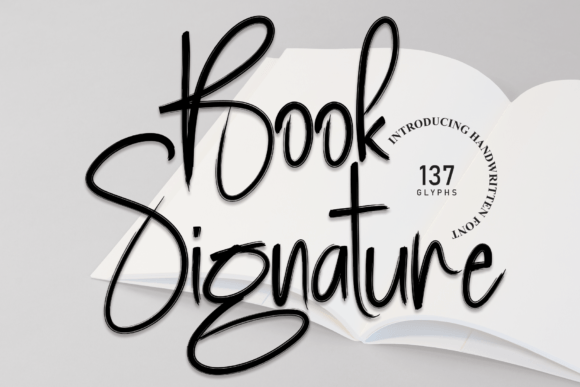
Why Book Signature Is the Go-To for Authentic Brand Voice
Every brand, blog, or creative project has a voice. Sometimes, that voice is loud and bold. Other times, it's quiet, personal, and sophisticated. If you're searching for a way to inject a sense of handwritten authenticity and elegant flow into your work, you've likely encountered countless script fonts. But finding one that balances beauty with true versatility is the real challenge. This is where a typeface like Book Signature enters the conversation, offering a solution that feels both personal and professionally crafted.
At its core, this is a delicate, elegant, and flowing handwritten font. The characters are designed with careful attention to balance and form, resulting in a visual rhythm that's pleasing to the eye without being overly casual or messy. This inherent quality is what allows it to match a wide pool of designs, from a boutique's product label to a wedding invitation, from a social media quote graphic to the headline of a lifestyle blog. It’s a premium font that understands its role: to convey warmth, personality, and a human touch in a digital world.
The Anatomy of Elegance: What Makes It Work
The appeal of a script font like Book Signature lies in its details. It’s not just a collection of swirly letters; it’s a system of well-balanced characters. This means the loops on the 'l' and 'h' don't overpower the simpler shapes of letters like 'o' or 'a'. The connections between letters feel natural, mimicking the flow of real handwriting but with the consistency required for professional use. This makes it an excellent display font for short headlines, logos, and pull quotes where you want immediate emotional impact. However, its clarity also allows for use in longer passages of text in certain contexts, like a special editorial section in a magazine or a book's chapter title page.
Understanding the font's personality is key. It speaks a language of understated sophistication, creativity, and approachability. It’s the visual equivalent of a warm, confident voice. This makes it particularly powerful for projects that aim to build a connection with the audience. Think of a wellness brand, a handmade artisan shop, a personal portfolio for a photographer, or a creative agency that wants to show its human side. The font does the heavy lifting of establishing that initial mood before a single word is read.
From Screen to Shelf: Real-World Applications
Theory is one thing, but practical application is everything. Where does a font like this truly shine? The answer is in the details of everyday design and brand identity work.
For Branding and Logo Design: A logo is the cornerstone of a visual identity. Book Signature can be a fantastic choice for a primary or secondary logo mark, especially for brands in the lifestyle, beauty, artisan food, or boutique service industries. It immediately sets a tone of care and personal attention. When used for a brand name on a logo, it creates a signature that feels unique and ownable. Pair it with a clean sans serif font for body text to create a beautiful and functional font pairing that ensures readability across all materials.
Across Marketing and Digital Assets: In the fast-paced world of social media, a unique visual hook is essential. Using Book Signature for quotes, announcements, or featured text in graphics on Instagram, Pinterest, or Facebook can stop the scroll. It adds a layer of professionalism and aesthetic appeal that generic system fonts lack. For websites and blogs, it’s perfect for hero section headlines, author bylines, or featured article titles, guiding the reader's eye and reinforcing the site's overall aesthetic. In email marketing, a subject line or header in this style can increase open rates by feeling more personal and less automated.
Packaging, Print, and Physical Goods: This is where the font's elegance truly translates. Imagine it on the label of a small-batch coffee bag, the front of a thank-you card included with online orders, or the title on a menu for a café. In packaging design, it communicates quality and craftsmanship. For print materials like business cards, brochures, or posters, it draws attention to key information. It’s also ideal for invitations—whether for a wedding, a corporate event, or a product launch—setting the perfect tone from the outset. Even on merchandise like tote bags or journals, it can transform a simple item into a stylish accessory.
Making It Your Own: Practical Design Advice
Having a great creative font is only the first step. Using it effectively is what separates good design from great design. Here are some actionable tips for integrating Book Signature into your projects.
Context is King: Always consider your audience and project goal. A handwritten font for a law firm's main website might feel out of place, but it could be perfect for the personal blog of one of its attorneys. For a children's party planner, it's a natural fit. Match the font's personality to the message you want to send. Is it friendly? Sophisticated? Playful? Ensure alignment.
Master the Pairing: Never use a script font in isolation for all text. Its strength is in highlights and emphasis. The most effective strategy is to pair it with a highly readable serif font or sans serif font. For example, use Book Signature for a main headline and a clean sans serif like Lato or Montserrat for paragraphs. This creates visual hierarchy, guides the reader, and maintains professionalism. Test your pairings at different sizes to ensure they work together harmoniously.
Legibility Over Everything: While elegant, always prioritize readability. Avoid using it for long blocks of small text, such as website body copy or legal disclaimers. It excels at larger sizes. If you must use it for a medium-length phrase, ensure there is generous letter-spacing and line-height. Check how it renders on both screens and in print, as details can appear differently. A quick test print on a home printer can save you from a costly mistake in a large print run.
Explore the Full Toolkit: A quality commercial font often comes with more than just the basic alphabet. Look for what’s included in the package. Book Signature may come with alternate characters, swashes, ligatures, or even a set of ornaments. These extra design assets allow you to customize words, creating truly unique logos or monograms. Understanding what’s available lets you unlock the font’s full potential and avoid a generic look.
Respect the License: Finally, always review the licensing terms. If you're using the font for commercial work—for a client, for products you sell, or for your business's marketing—you need to ensure you have the appropriate commercial font license. This is a professional necessity and respects the work of the type designer. Most premium font licenses are straightforward and allow for broad use, but it's your responsibility to verify.
A Final Thought on Visual Communication
Choosing a typeface is a decision about communication. It’s not merely about what looks pretty; it’s about what feels right for the story you’re telling. A font like Book Signature offers a specific, valuable tool: the ability to add a human, artistic, and refined touch to digital and physical projects. It bridges the gap between the impersonal nature of pixels and the warmth of a handwritten note. When used thoughtfully, with attention to context, pairing, and clarity, it becomes more than just letters on a page. It becomes an integral part of your brand's voice, helping to build recognition, trust, and a lasting connection with your audience. The best designs don't just catch the eye; they speak directly to it.